

When and How Did Salmon Arrive in Chile?
6 de mayo de 2014
Chilean King Crab: The Jewel of Patagonia’s Icy Depths
8 de mayo de 2014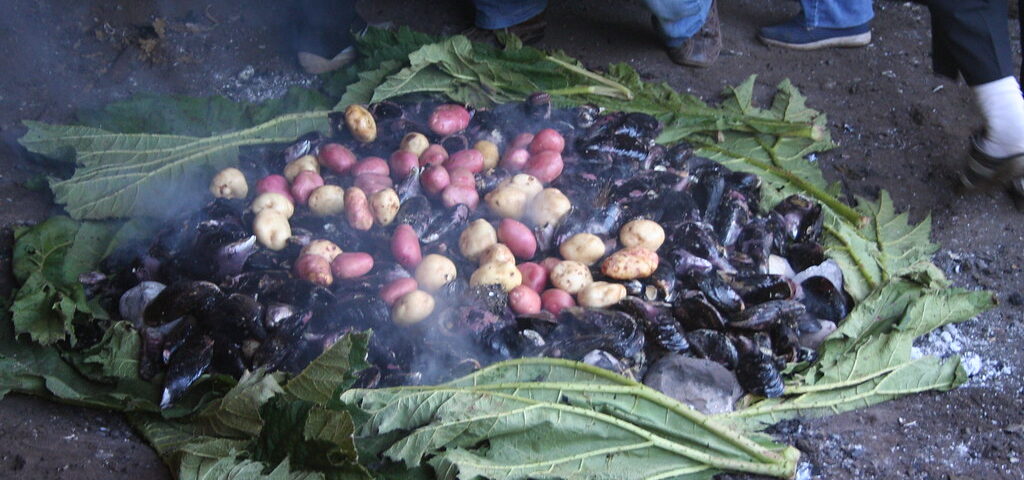
Discover Chile’s Ancient Underground Culinary Tradition
The Origins of Curanto Chiloe Tradition
Curanto is one of Chile’s most iconic dishes, with roots tracing back to the indigenous peoples of Chiloé Island. This ancient cooking method—steaming food in an earth oven—has been passed down for centuries, blending native techniques with Spanish influences.
- Pre-Columbian Roots: Originally prepared with seafood, potatoes (papas nativas), and milcao (potato pancakes).
- Spanish Influence: The arrival of Europeans introduced meats like pork and chorizo, enriching the dish.
- UNESCO Recognition: Part of Chiloé’s Island intangible cultural heritage.
How Curanto is Prepared: A Labor of Love
The Pit (Hoyo de Curanto)
- A deep hole is dug in the ground and lined with hot stones.
Layering the Ingredients
- Seafood: Mussels (choritos), clams (almejas), and sometimes crab (centolla).
- Meats: Smoked pork, chicken, and longaniza sausage.
- Potatoes & Breads: Milcao and chapalele (potato dumplings).
Covering & Steaming
- The ingredients are covered with nalca leaves (Chilean rhubarb) or wet sacks, then buried for 1-2 hours.
Where to Try Authentic Curanto
- Chiloé Archipelago: The heartland of curanto, especially in Dalcahue and Castro.
- Festivals: The Festival Costumbrista Chilote celebrates this dish annually.
- Restaurants: Many traditional picadas (local eateries) serve it year-round.
Why Curanto is More Than Just a Meal
This dish is a symbol of community—often prepared for large gatherings, weddings, and festivals. Each bite carries the taste of Chiloé’s history, from its indigenous roots to its modern-day celebrations.If you visit Chile, tasting curanto isn’t just about food—it’s about experiencing a living tradition that has survived for generations.
Related posts
17 de septiembre de 2026