Macroalgae
5 de mayo de 2014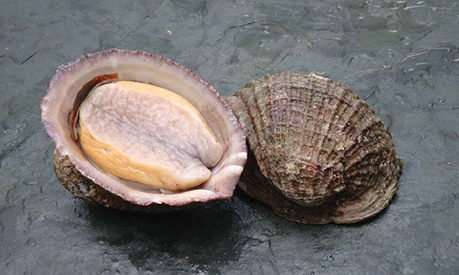
How Overfishing Nearly Wiped Out—Then Resurrected—Patagonia’s Prized Abalone
Chile is known for its wide variety of marine resources, including mollusks, which are notable for their wide range of species and their presence on Chilean plates. One of the most notable names in this category is the loco, but did you know that they are carnivorous and feed on mussels? Below, we provide a complete description of this species.
The loco (Concholepas concholepas) is a benthic mollusk (an animal or plant that lives in contact with or dependent on the seabed) of the Muricidae family, exclusive to the waters of Chile and Peru. Its extraction dates back to the first pre-Columbian inhabitants who settled on the coasts of both countries. It is distributed from northern Callao in Peru to the Strait of Magellan and inhabits rocky bottoms from the intertidal zone to 50 meters deep.
It is a carnivorous snail that feeds mainly at night to avoid predators such as sea lions and chungungo. Their diet consists of other mollusks such as mussels, piures, mussels, and picorocos; other sources of their diet include snails, worms, and dead animals. The locofish plays a key trophic (nutritional) role in the community where they are found, regulating population numbers with the species that share the substrate. In turn, the locofish is heavily preyed upon by starfish, various types of crabs, and seagulls.
The locofish has developed a precise and progressive reproductive cycle characterized by rapid recovery without a rest phase. The pata de burro (the name by which it is known in Peru) has separate sexes and reproduces by internal fertilization. In each cycle, it lays up to 9,000 eggs in capsules attached to the substrate. These take 60 to 84 days to develop, releasing small larvae at the end of the cycle.
Fishery of the Resource
There are records of loco extraction dating back to pre-Columbian times, but it began to show increasing values since the 1930s. Fishing is carried out by the artisanal sector (shellfish divers) mainly in the Coquimbo and Los Lagos regions, and is considered a fully exploited fishery.
Loco extraction peaked in the 1980s, reaching 24,640 tons, but since 2004 it has stabilized at a range of 3,000 to 3,600 tons. Despite this, Chilean legislation allows its extraction only from Benthic Resource Management and Exploitation Areas (AMERBs). These are areas where benthic resource exploitation rights are assigned to artisanal fishing organizations, following a management plan that prioritizes the conservation of the species present. An example of such an area in Chile is La Higuera, in the Coquimbo region.